
Once a year, our team works around the clock for a month to secure the single most important ingredient in every cow’s diet — and to grow a second income stream for the farm. Here’s what that month actually involves.
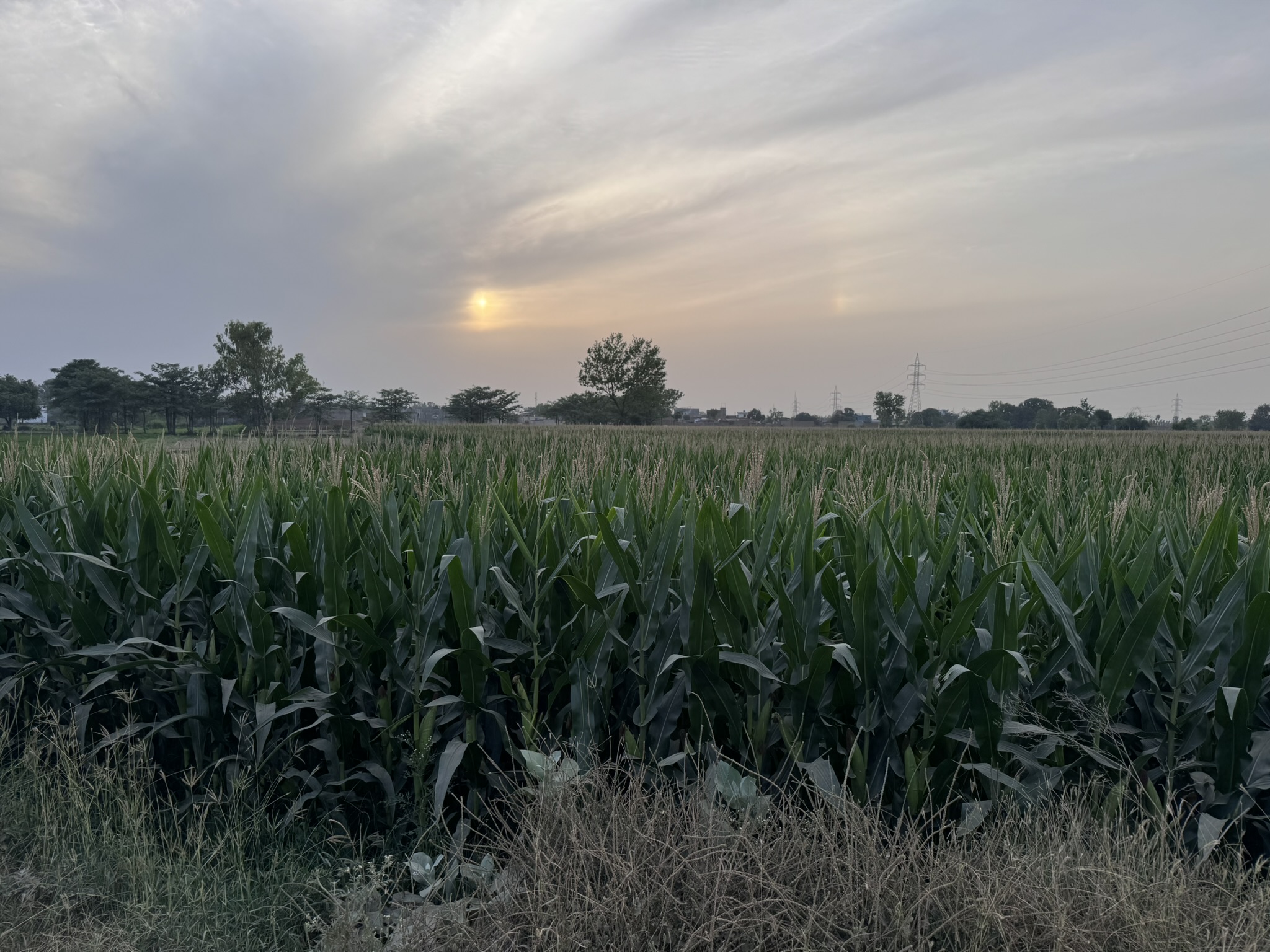
Silage is fermented maize — corn harvested green, packed tightly and left to ferment until it becomes the single most important ingredient in a dairy cow’s diet. In Pakistan it is made once a year, in May, and has to last the whole twelve months that follow. A cow at Gulshan Farms eats around 45kg of feed a day; roughly 30kg of that — around 70% of the diet — is silage, with minerals, soya, canola and other supplements built around it.
Fresh green fodder exists, but it isn’t available all year round in Pakistan’s climate. Silage is what turns one harvest season into twelve months of consistent, reliable feed — without it, both milk production and herd health suffer.
The maize crop is sown between mid-January and the end of February, timed so it reaches roughly 75% maturity by mid-May — the point at which it’s ready to cut. From seed to harvest is a 60–70 day process, but the harvest window itself is much tighter: just 25 to 30 days. Gulshan Farms leases 75 acres of its own land for maize and buys the remainder of its roughly 450-acre requirement from local growers, alongside a separate, larger commercial crop grown for sale.
Once harvest opens — this year, from 15 May — there is little real rest until it closes. Every pit must be filled and sealed within seven days of being opened, so the crop doesn’t begin to spoil; the target is around 50 acres of maize per pit, cut and packed inside that week. Each harvest machine is expected to cut 18 to 20 acres in 24 hours, running non-stop in shifts, with drivers and machinery working around the clock.
A team of around 40 to 45 people — drivers, machine operators and packing crews — works through the harvest to keep pace. Inoculants and salt are added as the crop is packed to help it ferment properly; the silage is pressed firmly to remove air, then covered with soil to keep it weighed down and airtight.
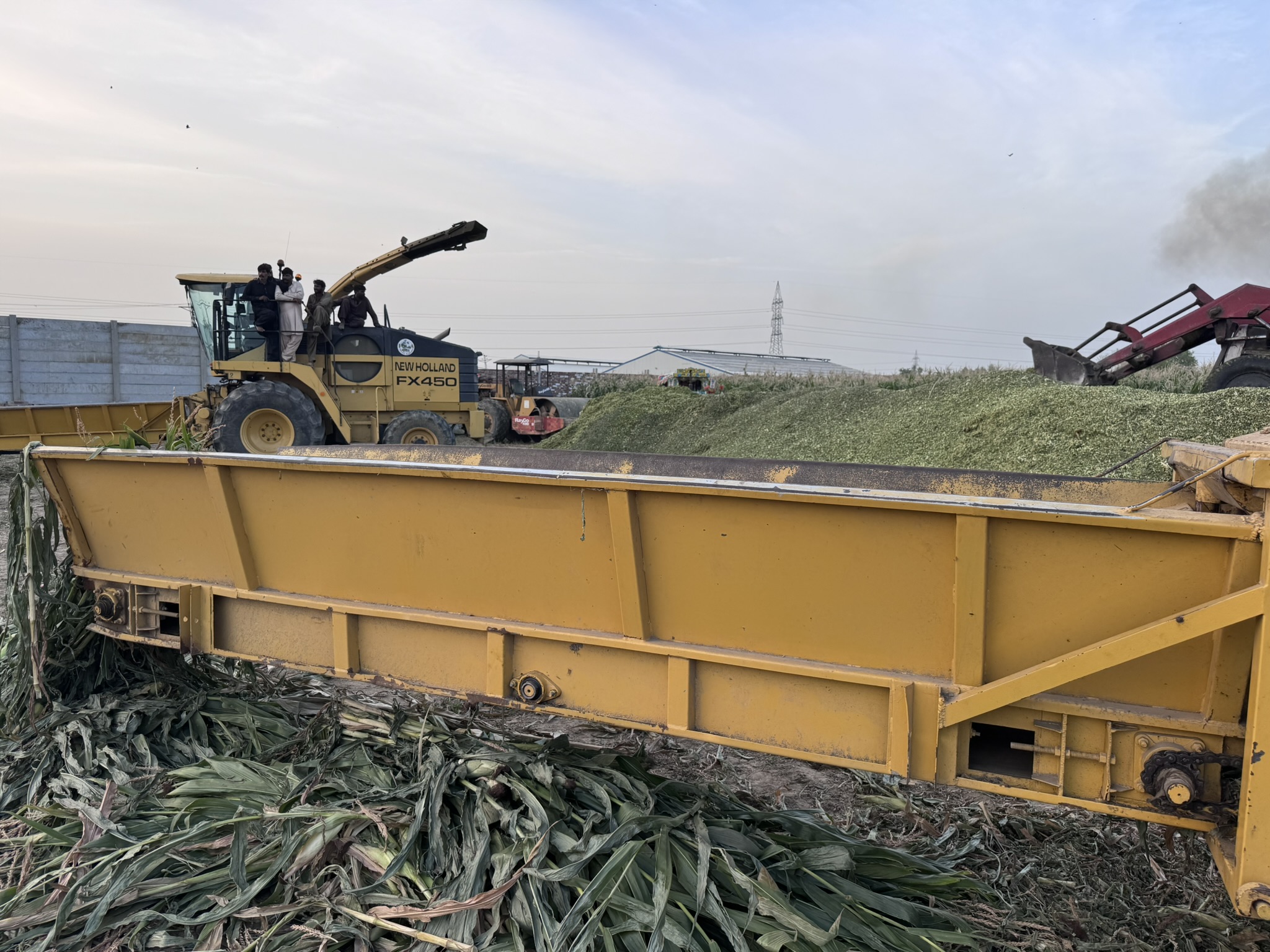
“Once it’s packed, the heat leaves the crop within about thirty days. Then microbial insects grow inside the silage — they help the cow digest and keep it healthy.”
What follows is a 45-day fermentation process. In the first month, the heat generated by the fresh crop gradually dissipates and beneficial microbial activity takes over — the same activity that makes silage easier for a cow to digest. Properly packed, with no air able to get in, silage stored this way can remain viable for up to two and a half years, which is what gives Gulshan Farms — and its commercial silage customers — real flexibility over when to use or sell it.
Alongside feeding its own herd, Gulshan Farms runs a separate commercial venture, Gulshan Silage and Forage, producing silage for sale to other Pakistani dairy farmers and for export to Gulf countries — including Qatar, the UAE, Saudi Arabia, Oman and Bahrain — where growing conditions don’t support this kind of crop.
The business rationale is straightforward: making a full year’s silage requires holding a large amount of cash upfront, which many smaller farmers can’t do, so they buy silage through the year instead — and prices rise accordingly, from around 10 rupees per kg at harvest to 20–22 rupees per kg by the following January, the best time to sell. Started last year, the commercial operation is targeting around 500 acres this year, sold through gulshansilage.com.
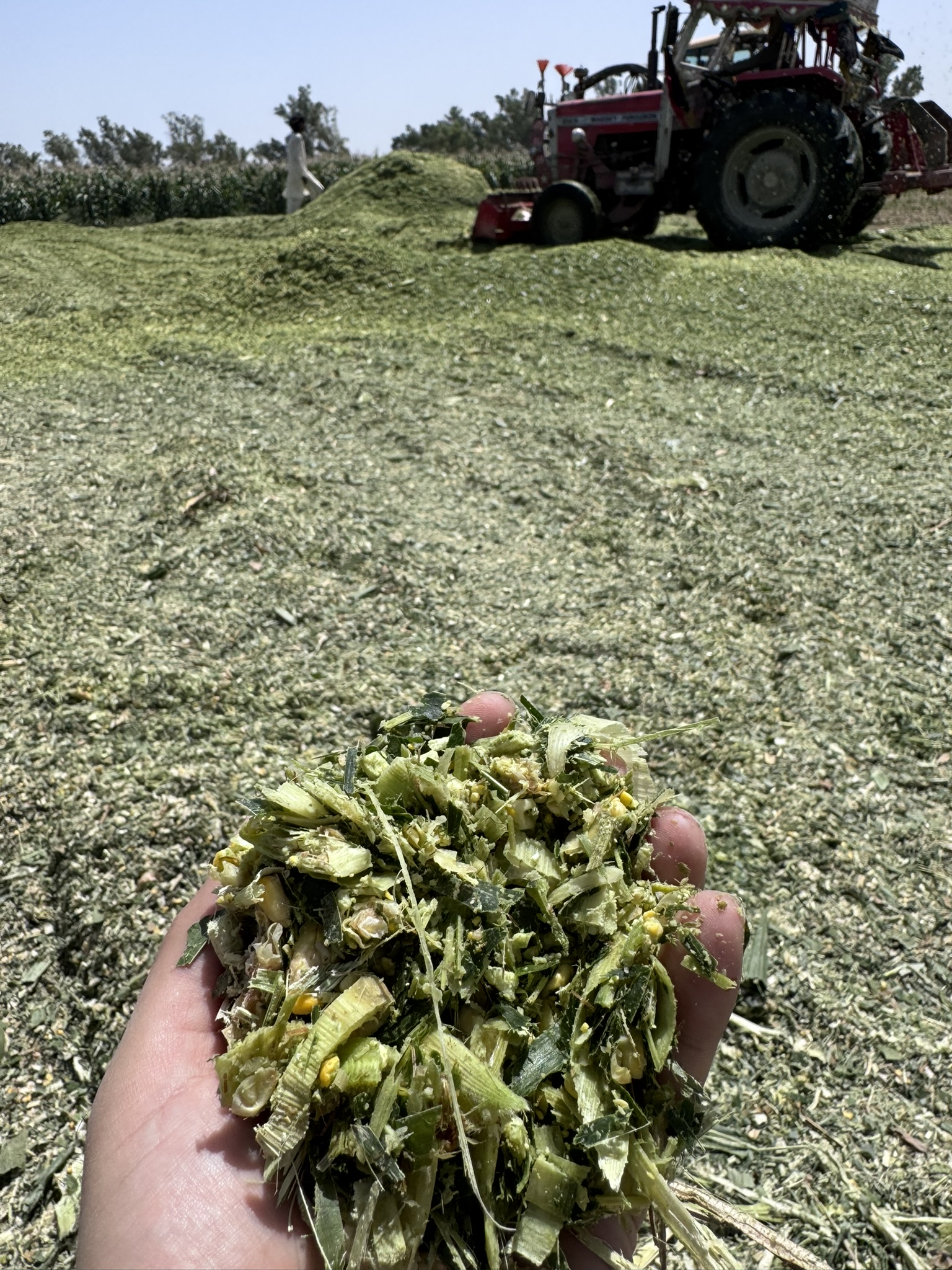
“Every farmer cannot afford to hold that much cash for a full year of feed. That’s the gap our silage business fills.”
Jafar learned the process from a fellow farmer, and the first attempt — made before the herd even arrived from Australia in December 2023 — covered just 50 acres and came with plenty of mistakes in both purchasing and packing. Each year since, the process has been refined and scaled up, from that first 50 acres to the roughly 950 acres (own herd plus commercial) planned for this year.
Feed security sits underneath everything else the farm does: a reliable, well-managed silage supply means predictable milk yields and healthier animals, which in turn supports stable returns. The commercial silage venture adds a second, genuinely profitable revenue stream that runs alongside the dairy operation rather than competing with it. And as with everything we share here, the aim is transparency — this year we’re planning to bring a camera crew into the harvest itself, so investors can see the process as it happens, not just read about it afterwards, Inshallah.